
Toyota Fortuner
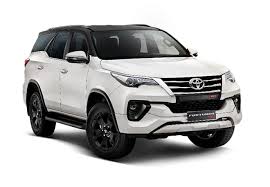
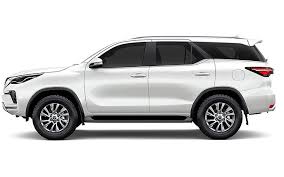
The Toyota Fortuner is a popular mid-size SUV that has gained a significant following across markets in Asia, Africa, the Middle East, and other parts of the world. Produced by Toyota, the Fortuner is based on the Toyota Hilux pickup truck platform, sharing its robust architecture and off-road capabilities. It is marketed in several countries under different names (for example, the Toyota SW4 in Brazil and some Latin American markets). The Fortuner is widely appreciated for its performance, dependability, and practicality, especially in off-road environments.
Key Features
History and Evolution:
- The Toyota Fortuner was first introduced in 2005 in Thailand and has since become one of Toyota’s best-selling models in many regions, particularly in Southeast Asia and India.
- The Fortuner was developed as part of Toyota’s strategy to offer a rugged SUV that could serve both urban and off-road driving needs, taking advantage of the robust Hilux platform for better performance.
- The Fortuner has undergone several generational updates, improving its design, technology, comfort, and overall capability.
Generations of the Toyota Fortuner:
- First Generation (2005-2015):
- The first-generation Fortuner was launched with a focus on delivering a reliable, no-frills 4×4 SUV. It was built on the same platform as the Toyota Hilux, which gave it impressive off-road prowess.
- It was initially offered with a range of petrol and diesel engines, paired with manual and automatic transmissions, and available with rear-wheel drive or 4WD configurations.
- Second Generation (2015-Present):
- The second-generation Fortuner debuted in 2015 with a more modern design, a more refined interior, and improved safety features.
- It was built on the new Toyota IMV platform, which was also used for models like the Toyota Hilux and Innova Crysta. This generation featured new styling, with sharper lines, a larger front grille, and updated LED lighting elements.
- The second-generation Fortuner came with a wider variety of engines and transmissions, offering better performance, fuel efficiency, and comfort.
Design and Features:
- Exterior Design:
- The Toyota Fortuner has a bold and muscular exterior, with a large front grille, sharp headlights, and a well-proportioned body. It strikes a balance between ruggedness and modern styling, which appeals to urban and outdoor enthusiasts alike.
- The SUV’s exterior design includes 17- to 18-inch wheels, a high ground clearance, and a rugged underbody that supports its off-road capabilities.
- Roof rails and chrome accents give the Fortuner a premium look.
- Interior:
- Inside, the Toyota Fortuner is designed to accommodate 7 passengers across 3 rows of seats. The second-row seats typically fold and recline to provide more flexibility for passengers or cargo.
- The cabin quality has evolved over the years, with later models offering high-quality materials, soft-touch plastics, and leather upholstery in higher trims.
- The dashboard features a central infotainment touchscreen (typically ranging from 7 to 8 inches), which supports Apple CarPlay, Android Auto, Bluetooth, and navigation in newer models.
- Comfort and convenience features like dual-zone climate control, electrically adjustable seats, and premium sound systems are available in higher trims.
Off-Road and Performance Capabilities:
- Platform: Built on the Toyota IMV platform, which is shared with the Toyota Hilux, the Fortuner is inherently strong and capable, making it an excellent choice for off-road driving.
- 4WD System: The Fortuner offers a 4WD system that includes a low-range transfer case, which enhances its off-road capability. It can easily tackle rough terrain, including mud, rocks, and steep inclines.
- Ground Clearance: With impressive ground clearance, typically around 220 mm (varies by model), the Fortuner can traverse challenging roads and obstacles.
- Suspension: The suspension setup is tuned for comfort on rough roads, while maintaining its rugged off-road capability. It often features an independent suspension in the front and coil springs in the rear, which help improve handling both on and off the road.
- Towing Capacity: Depending on the engine and model, the Toyota Fortuner has a towing capacity ranging from 2,500 kg to 3,000 kg (about 5,500 to 6,600 pounds), making it suitable for hauling trailers, boats, or heavy loads.
Engine Options and Performance:
The Toyota Fortuner offers a range of engine options, depending on the market and model year. Common engines include:
- Diesel Engines:
- 2.8-liter 4-cylinder turbocharged diesel engine: This engine is a popular choice and produces about 177 hp and 450 Nm (332 lb-ft) of torque, offering a great balance between performance and fuel efficiency.
- 2.4-liter 4-cylinder turbocharged diesel engine: Available in some markets, this engine produces around 150 hp and 400 Nm (295 lb-ft) of torque.
- Petrol Engines:
- 2.7-liter 4-cylinder petrol engine: Produces around 164 hp and 245 Nm (180 lb-ft) of torque. It’s a more economical option, often found in markets where diesel options are less popular.
- 4.0-liter V6 petrol engine: In some regions, a larger V6 engine is available, producing approximately 275 hp and 400 Nm (295 lb-ft) of torque.
- Transmission Options: The Fortuner is usually offered with a 6-speed manual or 6-speed automatic transmission, with the automatic version providing a smoother and more refined driving experience.
- Fuel Economy: Diesel variants typically offer better fuel efficiency compared to petrol engines. Diesel models can return anywhere from 10-14 km/l (23-33 mpg) depending on driving conditions, whereas petrol variants return 7-9 km/l (16-21 mpg).
Technology and Safety Features:
- Infotainment: The Fortuner comes equipped with an infotainment system that typically includes features like:
- A touchscreen with Apple CarPlay and Android Auto
- Navigation
- Bluetooth and USB connectivity
- Optional JBL or premium audio systems in higher trims
- Safety:
- The Toyota Fortuner is equipped with a variety of safety features, many of which are standard in the latest models.
- Toyota Safety Sense: In newer models, Toyota’s suite of advanced safety features (called Toyota Safety Sense) is available, which includes:
- Pre-collision system (PCS) with pedestrian detection
- Lane departure alert (LDA)
- Adaptive cruise control (ACC)
- Automatic high beams
- Active Safety Features: Higher trims come with additional features like hill-start assist control, electronic stability control (ESC), and traction control.
- 7 airbags (front, side, curtain, and knee) are standard, and the Fortuner also has ABS with EBD (Electronic Brake Distribution) and brake assist for added safety.
Trim Levels and Variants:
The Toyota Fortuner is available in different trim levels, with variations based on the market. Some of the common trims include:
- Fortuner GX: The base model, often featuring the 2.4-liter diesel engine and manual transmission, with basic features.
- Fortuner G: A step-up from the GX, often featuring added comforts like leather upholstery, larger wheels, and additional tech features.
- Fortuner V: A higher-end trim with more premium features, including better interior finishes, advanced tech, and safety features.
- Fortuner Crusade (or similar name in some markets): The top-tier trim, typically featuring the more powerful 2.8L engine, advanced infotainment, full leather interiors, and enhanced safety features.
- Fortuner TRD Sportivo: Available in some markets, this is a sportier trim with unique styling elements, such as body kits, black alloy wheels, and sportier interiors.
Price Range:
- In India, the price starts around ₹35–40 lakh (approximately $42,000–48,000 USD).
- In markets like Australia and Southeast Asia, the price ranges from AUD $50,000 to $65,000 or equivalent in local currencies for high-end variants.
- In South Africa, the price typically ranges from R700,000 to R850,000.
The Toyota Fortuner’s price varies depending on the market and trim level. In general:
Competitors:
The Toyota Fortuner competes with other mid-size SUVs, particularly in markets where off-road capability is highly valued. Some of its main competitors include:
- Ford Everest (known as the Ford Endeavour in some markets)
- Mitsubishi Pajero Sport
- Isuzu MU-X
- Mahindra Alturas G4 (in some markets)
- Honda CR-V (although more urban-focused)
- Chevrolet Trailblazer
Conclusion
The Toyota Fortuner is a versatile and reliable SUV that excels in both urban and off.